Well it’s that time of the year again people. March
Madness. Yes, that illustrious time of
the year where thirty-two games are played in the following two days as men and women alike across
the country track scores and stream games online or head to the bars on
their lunch breaks to get a taste of the Madness. I definitely fall in with that crowd although
with each passing year I find myself more and more out of touch with college
basketball and the actual teams that are playing out on the floor come the
beginning of tourney time. Yet I should
say I did win my bracket pool last
year so I’m no sack of rocks when it comes to picking the winners.
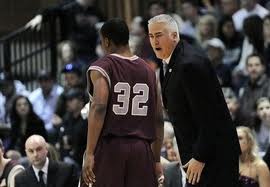
Senior Guard Will Cherry will not be denied
This year marks the first year I haven’t watched a
single college game all season until this past Saturday when I attended, for the second consecutive year, the Big
Sky Conference Championship at the Adams Center here in Missoula. My alma mater hosted, and the University of
Montana Men’s basketball team didn’t disappoint. Honestly, I could care less about Griz football, one of the best perks of successfully matriculating through the University of Montana is finally having a bona
fide rooting interest for March Madness, i.e. a school capable of participating
in the tournament given that my undergraduate institution (Bloomsburg
University) is Division II.
This year’s Griz squad features two players, Will Cherry and
Kareem Jamar, who are key to their success in winning the Big Sky Regular
Season and Conference Championships as well as any future Big Dance
success. Cherry plays point guard, or
the 1, while Jamar plays shooting guard, or the 2. Truth be told, I intended to begin writing my
blog a year ago at this time and the first blog was to be dedicated to the
prowess of Cherry. That never got off
the ground for various reasons but one year later I have finally righted my
blogging ship. As far as the Griz go,
one year later Jamar is now the ascending star of the program. I say that simply because Cherry is now a senior
and while he was largely responsible last year for all things backcourt (with
help frontcourt from bigs Brian Qvale, Derek Selvig and Mathias Ward), this
season he has battled the effects of a foot injury suffered in the preseason
and has missed some action.
Here is an ESPN profile piece on Cherry and his recovery:
In his absence, Jamar handled the role of ‘star of the show’
well. Good enough for second on the team
in scoring (points per game). Yet after
another injury scare for Cherry against Davidson a few weeks back, the smooth
as silk point guard from California has come back with a vengeance. This was on full display in their two
tournament games where Cherry totaled 39 points (to go along with four steals) in the two victories. He also nailed a crucial three point shot to put the Griz back in command with a five point lead with little more than a
minute remaining in the championship game against Weber State. Not to be outdone, Jamar matched Cherry's scoring output in those two games and further contributed fifteen rebounds and nine assists.
Yet Cherry remains very much the straw that stirs the drink while Jamar is a more battle-tested weapon than the player last March who was still growing into a supporting backcourt role on the squad. Now instead of the obvious comparisons to Batman and Robin, this dynamic duo is more like 1 and 1A. As such, with these two stellar guards, who very much possess pro potential, the
Griz stand a markedly better chance at making some noise Thursday night in San Jose when
they take on the Orange of Syracuse University.
Montana’s team is coached by Wayne Tinkle, a former Griz
graduate and player as well as owner of a lengthy overseas career playing
hoops. Tinkle came back to Missoula in
2007 and has built a program over the past seven years that is becoming
something special going 141 -77 overall (.647) and 85-31 (.733) in Big Sky league action. This was on display
Saturday night against Weber State. This
year’s Griz squad is incredibly deep unlike years prior. Their power forward and leading scorer (and Academic
All-American) Mathias Ward is out for the year with a foot injury suffered
against Davidson. In his absence,
players like Spencer Coleman, Michael Weisner and Kevin Henderson have
stepped up to shoulder the load in the paint.
Under Tinkle’s daft leadership, the entire squad has
overcome injury adversity this year and proven no worse for the wear as
evidenced by their 19-1 Big Sky Conference record (25-6 overall). Watching Tinkle roam the sideline is a sight
to behold for a few reasons: one is that he is 6’10” and towers over everybody
else on the court including the uniformed athletes. Second is that he is a personable dude and
treats his players like any great coach should – he can be seen on the sideline
after a player makes a dumb play beginning to loudly admonish him, then he
resorts to correcting the player’s technique or specific decision and then ends
the process by wrapping his huge wing around his player’s shoulder, consoling,
cajoling and reassuring him of his deserved place out on the court.
Pie Guy Photo Archive: The Griz celebrate the 2012 Big Sky Title
This approach has led to two consecutive Big Sky regular
season and conference Championships and three Big Sky Championships/NCAA
Tournament appearances in the past four years.
The only thing “Tinks” has yet to accomplish is to produce a magical Big
Dance victory. Last year the Griz were
clobbered by the University of Wisconsin, known for their physical and stifling
defense. This year they draw Jim
Boeheim and his Syracuse squad who have reached the tournament for the 30th time during Boeheim's tenure.
Needless to say, the Griz have their work cut out for them
but count me among the believers. Guard
play is absolutely critical when it comes to the tournament and specifically tournament upsets and while the
Griz program may be devoid largely of the Division I talent floating around
this tournament, Cherry and Jamar are very much among the most talented players
in all of college basketball.
Here's a link to the local Missoula newspaper's feature on the dynamic duo:
Cherry at 6'1" has been named a Mid-Major All-American and Mid-Major Defensive All-AMerican, leading the Big Sky in steals in his sophomore and junior years) and he can get to the rack against the biggest of bigs and he can also stop, pop and shoot against any opposing point charged with covering him. Jamar at 6’5” has game that is similar to
Lebron James in that he is just as comfortable setting up a teammate for an easy
two as he is stroking a three or taking it hard to the glass. Jamar also has a Carmelo Anthony-like
smoothness when it comes to scoring and uses his physical frame to get shots
off against guys who are often four or five inches taller.
These allusions to pro players (and two of the best) are no
accident. I will stop short of
guaranteeing Cherry and Jamar’s NBA career success and surely they can go
overseas to Panathinaikos, Zalgiris, CSKA Moscow or Real Madrid and any other
of the talented European squads and have solid ten to fifteen year
careers.
Jamar taking it to the opposing D as Cherry watches on
But I will leave final judgment up to you my readers, college hoops fans and those in the national television audience who will tune in tomorrow night. Cherry and Jamar are two players
that Syracuse must neutralize if they hope to squash the
underdog and advance to the second round.
In the end, I will make the safe assertion that I fully expect the Griz to make it a game and if it does come down
to a final Montana possession, Syracuse (even in their famous 2-3 zone with man-to-man
principles) will be hard pressed to stop Cherry and/or Jamar from getting the game-winning shot off.
We shall see. Thus the beauty of the sports and the beauty of March Madness. Schools big and small across the nation meeting up to settle who's best out on the hardwood. Until
then, if you’re in Missoula, you can find me at Flipper’s sipping a PBR watching the big
game. Should be entertaining...
Music
plays an incredibly large role in my life. Without knowing how to
play a single note of anything on any instrument it still informs my approach
to life on a daily basis. So much so that I earned my Master’s Degree in
Literature at the University of Montana in large part by focusing my thesis
project on the role music plays within literature. It’s a passion
that’s become a professional pursuit. I listen to every kind of
music and that diversity extends into my kitchen every Thursday and Friday
nights when I’m baking for Saturday’s market. Listening to Patsy
Cline or Charlie Parker is a great way for me to relax starting off when my
nerves are frayed from worrying about the task at hand. As I work my
way into a flow, I tend to usually cue up some harder music like Wu Tang or
Jimi Hendrix and on those especially longer evenings, heavy doses of Black
Sabbath or Audioslave. I’ve seen all of those hard rock acts live actually,
save for Jimi, and my life is much richer for it even if my hearing is not.
Of those performances one stands out the most if only for, shall we say, the
murky circumstances surrounding that evening and this time of the year...
The following is an excerpt from a short story I read this past
Saturday at the Crystal Theatre here in Missoula as part of the
greater 6th Annual Ç (pronounced sa-dee-ya) literary arts journal
release party:
I always get jittery come the beginning of March. Perhaps I read Shakespeare at too
early in life when my brain was still soft in the cotton-brained infancy of the
emotional bewilderment that is pubescent American life. Though with most of my early
Shakespeare experiences, the meanings my 9thgrade teacher Ms. Cadwallader tried to
impress upon me were mostly lost on me until some years later. The madness of March has perpetually
imposed great consternation, trials and tribulations upon me. One such experience dates back nearly
ten years ago to the day when I was a punk 24 year old paralegal living and
working in D.C. and otherwise trying desperately to break out of my
shell.
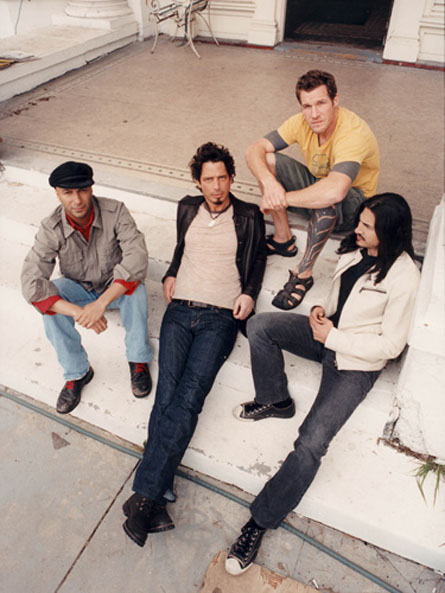
my boys
One place I always honed my shell-breaking was rock and roll
music. In those days my bread and butter was hard driving music, the
louder and more aggressive the better. My favorite band at that time was
Audioslave. Surely you all remember Audisolave. They were comprised
of the lead singer from Soundgarden, Chris Cornell matched with the musicians
from the then newly defunct Rage Against The Machine, lead guitarist Tom
Morello, bassist Tim Commerford and drummer Brad Wilk. As a devout fan of
both of those two previous bands, Audioslave from the jump was a musical match
made in heaven for me.
This super group hooked up in the late summer of 2002 and dropped
their self-titled debut later that fall to much fanfare in the world of hard
rock. Me and two of my best friends, ZigZag and Wilson, were a part of
that wider audience thirsting for a new totally kickass record and performing
act. Audioslave, the album, was a platinum-selling masterpiece, blending
driving and bullying rock with delicately soulful ballads for twelve
tracks. To put it mildly, this band was everything we dreamed it could
be. So when tour dates got set up, we naturally went ‘all in’ to attend.
Our motley crew consisted of ZigZag & Dub. Zigzag was my
childhood friend and oldest child born to a Pakistani family living just
outside of Baltimore. His given name was the same as his father’s,
Zulfigar, and while that is a truly great name, we could never comfortably
abbreviate it, so we borrowed the nickname from the Wu Tang Clan’s Rza which
was ‘Rulah ZigZagZig Allah’, and shortened it to ZigZag. For a Muslim, ZigZag
sure did love to drink and smoke. Then we had Wilson, better known as
Dub. Dub and I hooked up while working at a firm just off DuPont Circle a
few years prior. Dub hailed from Blue Grass country, raised on the
mother’s milk which around those parts meant none other than Kentucky
Bourbon. He was a decade my elder but if you got him wound up on the milk
there was no telling where that spinning party top might stop. As a child
Dub was tossed out of elementary school for sipping moonshine on his lunch break
– I kid you not.
So, Audioslave first announced two exclusive shows before they
would hit the road for an official tour later that spring. The first was
a Thursday night jam at the Hammerstein Ballroom in New York City while the
second was appropriately placed in Philadelphia’s Industrial District at the
Electric Factory. As epic as the New York City show would be, we couldn’t
really get the time off work so we decided it’d be easier to just bop up to
Philly. Dub was a professional concertgoer/ticket haggler so when I gave
him the green light for me and ZigZag, it was only moments later he was
printing off electronic tickets from his office computer. Our three way
date with rock and roll history was set for Friday, March 7th.
One might say a harbinger of things to come was the night
four days prior to the show when I slid my car into a curb making my way home
from work in the driving snow. It wasn’t too damaged but the
alignment did require some shop time. Graciously, my
insurance agency comp’d me a replacement I was to pick up the day of
the show. So, on my lunch break that day I walked down to the rent a
car spot to claim my ride. I looked forward to and even romanticized
the possibilities a rental car may afford me outside my daily
functional reality of a Nissan Maxima. Turns out they had me pegged
for a goddamned Lincoln Continental, indeed befitting of its own
continent. At this point there was no turning back, I asked for
compact economy and I got the four-door Executive. While at the helm of
this massive land beast at no point did I feel too big to fail.
I cruised down L St feeling self-conscious and insecure.
When I got close to Wilson’s office I called up and requested he hightail it
downstairs: “Dub my man, hustle your ass ‘cuz I’m afraid I’m going to need
landing signals to parallel-park this mofo.” With Willie in tow, I
swerved down Connecticut Ave and did the same for Zulfigar at his office: “Yo
Z’s, get down here pronto ‘cuz I may have to wait for you at the bus
stop.” After a few end arounds, a couple of hazards otherwise known as
wayward hot dog cart vendors and only one roundabout, we had finally made it on
the beltway to Philadelphia.
Once we cleared the district, we took the first highway off ramp
to pick up the few remaining outstanding rock and roll roadie essentials.
These essentials came in the form of a twelve pack of Miller High Life, two
packs of smokes and a pack of cigars. Before we could get to the
register, Dub impatiently ripped open the fresh cigar pack and one’s end off ,
chewing it up, spitting it out then smiling maniacally as he made our final
impulse grab of the afternoon - a 24 oz can of Steel Reserve. He was
positively (and oddly) giddy about that Steel Reserve. Back now in the
Executive, Dub as elder statesmen of our delegation took the back seat.
The distance between us from drivers to back seat was nearly six feet.
This gulf made me feel like we were transporting the head of state of rock and
roll fandom and as ZigZag rode shotgun beside me I also felt as if I was now in
some fucked up Driving Miss Daisy trip.
We now had 140 miles to go in a sailboat with the wind at our
backs. After we hit full speed on the interstate, I lit up the twelfth
letter and we all cracked open the first of our fresh cold ones to
celebrate. I leaned back to pass the freshly lit J to Wilson but he was
so far away I had to throw it to him. The trip up was some kind of
exhilarating. The best part aside from the celebratory smoking of
everything smokable and the drinking of the cheap cold beer was rocking out to
a host of albums from Vol. 6 Dylan Live 1964 to Audioslave to the Very Best of
Deep Purple.
Approximately two hours later we arrived triumphantly at the
Electric Factory high on rock and roll and actually we were just high.
Once we got to the parking lot, we ripped our final few puffs of the Mary, had
a quick cigarette and made our happy way into the club. The Factory scene
was grungy and intimate, just the way we liked it.
The crowd buzzed with anticipation chattering amongst themselves:
How’d they sound in NYC last night? Did they cover any Rage or Soundgarden
tracks? Soon the rock gods came onstage heavy on swagger and light on
banter. Brad mashed the drum twice, before Tim struck the pulsating bass
line followed by Tom leaping in the air as high as he could, synchronizing his
descent back to earth with that of his right arm across the guitars face.
Cochise was kicking in and Cornell stoically paced the front of the stage.
The show was incredible. They played every song on the album
and even covered Rush’s Working Man, and hell I don't even like Rush. It
was loud, it was intense, it was 90 minutes long and it was everything we hoped
it could be. Yet now the show was over and our night was just
beginning...
===============================================
I'd like
to thank everybody for coming out this past weekend and if you weren't there,
well you just missed a literary party like no other. The 6th
Annual Ç literary arts journal release party showcased twenty
poets and writers, two photographers, one musician (thank you Eric Bostrum for
setting the mood, kicking ass and also for covering Townes Van Zandt), one keg
of beer as well as three tables of food catered by two of the best chefs in
town who operate under the radar, Alex MacKay and Fred "The Machine
Gun" Dealaman, Jr.
Singer/Songwriter/Musician Eric Bostrum
The event
also included original promotional posters painted by artist B Stew and most
importantly 105 copies of the baddest literary journal around that you've
probably never heard of unless you know me personally. Last but not
least, I'd be remiss if I didn't thank the Jeannette Rankin Peace Center for
sponsoring the event (we could not have it done it without your support) and
the Rhino bar for donating a delicious keg of Blacksmith Brewery's Amber Ale.
Here's a
bit of local press from the run-up to last weekend's party:
If you'd
like to read the rest of the story, stay tuned to Pie In The (big) Sky for
further details on Ç 7 to be published sometime this Summer 2013 under the
editing stewardship of Alex MacKay. More details to follow and if you'd
like to submit a poem or a piece of prose, please send your submission or any
questions to cedillavii@gmail.com. Submission deadline is May 15, 2013.
Guest Editor, Dr. Casey Charles
Dr. Lisa Simon
Many
thanks again to all who attended. Thank you to all the readers who
presented as I am honored to have shared the stage with all of your beautifully
diverse and talented selves. Tim, Casey, Lisa, Mark, Alex and myself
cannot thank you all enough for contributing to such a special evening.
In case y'all missed it, this past weekend marked the 100th anniversary of the Women's Suffrage Parade in Washington, DC. The parade was staged from March 1st through March 3rd and highlighted the lack of political enfranchisement (i.e. voting and running for public office) for American women. While the 19th Amendment wouldn't come until seven years later, this Parade served as one of the first nationally organized protests.
You can read further about it and see more cool pictures from the events of that weekend here:
I bring this up because it is historically significant and important to note given the political stance of some of our less progressive federal and state representatives. For example, we can look at the state of Texas where draconian family-planning budget cuts to planned parenthood are now thankfully being reconsidered. Seems some conservatives are rethinking their defunding stance in the name of fiscal sanity and it strikes me as funny how social conservatives parade as fiscal hawks:
"In the fiscal crunch of 2011, the Legislature cut the
state’s family-planning budget by two-thirds, with some lawmakers claiming that
they were defunding the “abortion industry.” Researchers at the University of
Texas at Austin, found that more than 50 family-planning clinics had closed
statewide as a result.
Now, amid estimates that the cuts could lead to 24,000 additional
2014-15 births at a cost to taxpayers of $273 million, lawmakers are
seeking a way to restore financing without ruffling feathers."
Beyond protecting women and their reproductive rights and the long term fiscal benefits of such a political stance, we've also recently had to endure the congressional debate for reauthorizing the Violence Against Women Act. This measure was mercifully approved, most graciously advanced by the wholly reluctant and largely culturally backwards House of Representatives last week.
It's important to raise these issues because living in a patriarchal society as we do, it is easy to dismiss claims about discrimination against women as invalid or otherwise commonplace and therefore, not newsworthy. Which is exactly what this fine Princeton administrative official does here, in defending the University's policy to not publish the findings of a study that find 1 in 6 women at Princeton claim they have been sexually assaulted:
"I don't know that there is a real benefit to releasing
it," Sandoval added. "I think if we had found something very
different from the national average, that would be one thing, because that's a
real story. A story that Princeton's rates of students who have been assaulted
is on line with national averages is really not a story, but I mean in this
news environment, people would make a big deal about it."
No, of course not Ms. Sandoval, routine sexual assaults are never newsworthy?! The results were ultimately leaked outside of the official administrative channels because the University seems entirely disinclined to actually raise awareness. These are precisely the conditions that contribute to social and cultural amnesia when it comes to addressing social justice in modern day America.
You can read the report of the survey's findings and see the actual data summary here:
Lastly, the above report lends itself to further exploration into the issue of sexual violence on college campuses and there are notable events happening right here at the University of Montana that I will have to follow up on later.
For now, time is running out on this blog post so I leave you with this final graphic for y'all to consider the present state of affairs for women's earnings compared to their male counterparts in present-day America.
While great progress has certainly been made in the past 100 years, there are clearly more steps to take to advance the protection of Women's rights and aid their total enfranchisement in the United States of America today and into the future.
"If I can't dance, I don't want to be part of your
revolution." - Emma Goldman
jacoby mid-squirrel
While the late 19th century/early 20th century revolutionary political activist was certainly not talking about American football in the above-referenced passage, long since the days of Storyville and Harlem, dancing has always played the role of subversion in American culture. Though football has never been known to question much in the way of authority, dancing in the spirit of true postmodern expression serves to revere, revise or mock authority (and usually all three simultaneously), or at least peers and/or predecessors.
I bring this up because it was announced yesterday that Baltimore Ravens wide receiver and New Orleans native Jacoby Jones, fresh off his starring role in the Ravens Superbowl victory in his hometown, would be one of the sixteen contestants to star in ABC's Dancing With The Stars. In case you weren't aware, I was born in Baltimore and despite at present the great distance from my homeland I remain a proud and loyal Baltimore sports fan. Rest assured this will not be the last mention of anything Ravens or Orioles related in this space.
So in honor of the MVP-calibur #12, we're here to showcase his electric moves and hopefully he can incorporate a few of them into his Stars competition. I know now that PITS will be covering (and watching) Dancing with the Stars for the first time ever. Stay tuned for that but until then, let's get on with Mr. Jones' bad self:
This first dance is popularly known as the Chopper City Juke but is arguably a 1990's New Orleans dance known as the Beanie Weanie. The first video features Jones busting a move post-touchdown:
The next video is an example of the Beanie Weanie as demonstrated by this random dude, whom I thank for the tutorial:
This following video is the official video for the Choppa City Juke and offers viewers a how-to:
After viewing it easy to understand one's confusion as to which dance Jones is performing. There is also confusion in the nomenclature. The Choppa City Juke was popularized in the NFL by Mike Sims-Walker and Chris Johnson, both natives of Orlando. Choppa City refers to the city of New Orleans so I remain at a loss how Orlando can claim the Choppa City Juke at least with the Choppa City prefix but I'll defer to any of my readers to properly enlighten me in this regard. As such, Sims-Walker and Johnson have both performed this dance throughout their careers. After the Philadelphia game where Jones did the above dance, he was quoted as saying afterwards “I kind of did something like that when I played in Tampa.
It was a little different twist to it...(t)hat’s how
everybody knows I’m happy. I come in and I’m singing and dancing and I go about
my day.”* Choppa City Juke or Beanie Weenie? I'll let you the readers decide...
Regardless, there are plenty of examples for us to choose from of the Juke, be it from New Orleans or Orlando, and they are all awesome.
So speaking of awesome and back to Jones, here is the entire catalog of his touchdowns and dances in the Baltimore Ravens 2012-2013 Championship Season condensed into slightly less than three minutes of viewing pleasure. Enjoy.
You will notice that he starts out jukin against the Eagles, appropriating Deion Sanders' Primetime touchdown dance in reverence to the Hall of Famer against Sanders' old Dallas squad, while overall employing several variations on the juke theme, most notably this one here with mocking effect:
This comes against the Ravens biggest rivals, the Pittsburgh Steelers. Jones' touchdown was ultimately the difference in the game and his celebratory post-touchdown tour de force begins as the Choppa City Juke and then midstream incorporates The Bennie Biggle Wiggle made popular (in NFL circles anyway) by Steelers receiver Antonio Brown before reverting back to finish and flourish with the Juke. Brown, as the rest of Pittsburgh that day, must've felt sick watching this. I, on the other hand, will never grow tired of the video or the memory.
Of all of his scores and dances the coolest to me is the Giants touchdown dance where he shakes his lower body along with the upper body and arms herky jerk. This touchdown play however did not stand as it was ultimately overruled via replay. No matter, style points here at pie in the (big) sky count and they will on Dancing as well. You'll also notice that after scoring on the Mile High Miracle under such drastic circumstances, all Jacoby could muster was a simple jump bump with fellow teammate Anquan Boldin. Lastly, Jones' final touchdown and dance of the Baltimore Ravens season is most appropriately the Squirrel Dance which served as fitting tribute to Ray Lewis, who made that dance famous over the course of his seventeen year Hall of Fame career. Maybe you've seen that one once or twice by now.
So there you have it. Jones' touchdowns and dances served to honor the great ones like Neon Deon and belittle his competitors like the Pittsburgh Steelers who struggled all season and failed to qualify for the playoffs. Meanwhile, Jacoby's team won the Vince Lombardi Trophy and thrust the colorful Mr. Jones into the national spotlight. The spotlight as bright as it was on the first Sunday evening in February and the one awaiting him on national television beginning Monday, March 18th. Let's see if Jacoby's moves on the gridiron translate to the dance floor. We here at PITS certainly believe in #12 and will be watching, rooting and reporting accordingly.
"A prominent Brooklyn assemblyman defended himself on
Monday after attracting attention for wearing blackface to a party he hosted
this weekend to celebrate the Jewish holiday of Purim.
The assemblyman, Dov Hikind, a Democrat who has been a
longtime power broker in the Orthodox Jewish community, wore an Afro wig,
orange jersey, sunglasses and brown makeup or face paint as part of a costume
that Mr. Hikind said represented a “black basketball player.”'
On
February 21, 1965, less than two months from his 40th birthday and a
year removed from his pilgrimage to Mecca, Malcolm X was gunned down at the
Audubon Ballroom in Harlem.He was in the process of writing a new chapter of his life post-hajj, which is precisely why he was taken
out. The world is worse off for his loss considering what a more politically
seasoned Malcolm X, as venerable statesman and illustrious champion of his
people, could have done and helped to achieve by influencing and shaping domestic and international
politics over the past 48 years.Despite his life being tragically cut short, in 39 years he accomplished many things yet his two greatest legacies were reconnecting the American Negro
to his/her African past and for restoring the collective dignity and self-respect of his
downtrodden people.
It’s
why boxer Cassius Clay changed his name to Muhammed Ali, why poet LeRoi Jones changed his
name to Amiri Baraka and moved uptown to start the Black Arts Repertory Theatre
School in Harlem after his assasination.The Black Arts movement spread across the country and with it, the Black
Power Movement.It’s what he’s getting
at in this short video clip below:
The
essence of Malcolm’s argument here is that it was time for the American black
population to wake up, shake off the yoke of ideological and
physical oppression of white supremacy, discard the dysfunctional legacy of self-loathing and self-sabotage brought about by their slaved and jim crowed past, reconnect with the motherland of Africa and stand up to their white oppressors.
Malcolm
Little went from petty street criminal (Detroit Red) to Nation of Islam (NOI)
spokesperson (Malcolm X) to champion and redeemer of black humanity (El-Hajj Malik el-Shabazz).He was the late bloomer who shone so bright and
so quickly and so unrepentantly in opposition to the powers that be that he
ultimately paid for this rapid ascension with his life.He was a
great man worthy of veneration and scholarship.
I
credit Malcolm with cracking my untapped and unsuspecting psyche when first reading The Autobiography of Malcolm X (1964) in 9th grade.He turned me on to thinking critically though
I wouldn’t have been able to articulate it as such if you had asked me then.He turned me on simply by looking at
things from a different perspective.Since then, I’ve spent some years studying and training myself to think
critically and engage society in a discursive manner.I have made some progress but there is always
more to learn and more to do and that is what I would stress to any student of
mine studying in any academic realm or plying any artisan trade.Never stop learning. As the late great Max
Roach (and let us never forget Max Roach) was known for saying, you got to put in that time.In other
words, devotion is not borne overnight.
What specifically registered for me when I first
read the few speeches of his I could get my hands on was his assertion that
there is a “corrupt, vicious and hypocritical system that has castrated the black
man” here in the United States of America.Malcolm's words here were as bold and true as the sun is hot and bright.The force of clarity he spoke with always
impressed me and this clarity indicated to me he was well-read even
if he was not an “accomplished” professional intellectual. Back then, there weren’t
many accomplished African American intellectuals.This being the Post-war consensus Era of
McCarthyism of the 1950's that turned into the hosing of protesters and firebombing
of black children in churches of the civil rights era of the 1960's.It is important here to note that Duke University, the home of Mark
Anthony Neal (a contemporary scholar worthy of your attention) is
currently celebrating its 50th year of having black students in the
student body!!!(!!!) http://spotlight.duke.edu/50years I mention this to reiterate to the younger generation that American social progress that may be taken for granted in 2013 is only most recent. Separate and unequal was the America Malcolm grew up in, that our parents and/or grandparents grew up in and this is the same country we were
born into.It is this collective
conscious of American history that informs our society culturally today whether
we choose to acknowledge it or not.
(1899)
What
African Americans have had to overcome historically and strictly symbolically-speaking, to restore their pride
and dignity and what alternately passed for white entertainment is disgusting, degrading and impressive in its scope: The old minstrel show of
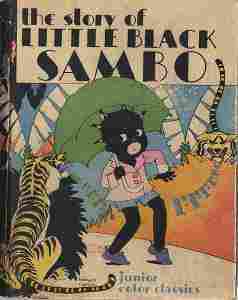
Jim Crow, minstrelsy in general, the Black Sambo, shucking and jiving, Stepin Fetchit - all images depicting the black as a dandy, but
the dandy as dumb and comically (i.e. commercially) valuable. Behold the magical
coon!This uniquely American history is
as vast as it is virtually unacknowledged today.Many white folks don’t consider the racial
history of America.Americans have been
aided and abetted by a power structure that prefers our history wiped clean
like a blank slate lest we remember the original sin that America was conceived
upon.Whitewashing is a political act the State enacts against its citizens (and therein citizens sometimes engage in themselves with encouragement from the State) and it is up to artists to reinforce the images of a history that must never be forgotten. It is who we are for better and for worse. Most Americans want to live in a colorblind
society – yet for every genuine expression of people hoping for such, there is
also an ideological scheme at work that plays to such naïveté, that stirs racial resentment even further for the "how dare they" aspect of re-conjuring these offensive images and implicit (mis)characterizations. Make no mistake, this is an orchestrated effort against the citizenry to quell any legitimate dissent all the while maintaining the
status quo which simply means to keep their money and political influence in
perpetuity.
the dancing sambo (1940)
If
any citizen assumes the ideology of the State nonpareil, then one is
nothing more than a tool of the state, a mouthpiece and a lackey flag waver – I
believe nothing in life should be accepted nonpareil – except for love.And even that will get you into all kinds of
trouble as evidenced by the grim reality of Malcolm’s demise 48 years ago to
the day. Make no mistake, Malcolm was not born a hater, he merely and strategically matched
a society’s propensity to hate him and his people commensurately. It is also important to distinguish that reacting is the not the same as provoking. The following passage is taken from a speech
given by Malcolm on February 14, 1965, one week before his assassination:
"Why,
he's advocating violence!" Isn't that what they say? Every time you pick
up your newspaper, you see where one of these things has written into it that I'm
advocating violence. I have never advocated any violence. I've only said that
Black people who are the victims of organized violence perpetrated upon us by
the Klan, the Citizens' Council, and many other forms, we should defend
ourselves. And when I say that we should defend ourselves against the violence
of others, they use their press skillfully to make the world think that I'm
calling on violence, period. I wouldn't call on anybody to be violent without a
cause. But I think the Black man in this country, above and beyond people all
over the world, will be more justified when he stands up and starts to protect
himself, no matter how many necks he has to break and heads he has to crack.”
Don’t
get it twisted.The mock outrage of the
whites of those times convinced no one outside of blind racial allegiance or (senti)mental
weakness.As Malcolm said, if he was as
violent as they claimed him to be, he would’ve been put in jail.
One
of the most admirable aspects of Malcolm’s personality was his love of books and passion for knowledge.His desire to read even in the dim light of
his jail cell remains a strong political statement following in a tradition of fellow African American social and political activists. This pathway
to knowledge through literacy has always been central to the struggle of African
American people since the days of the prohibition of literacy amongst the slave population. The best example being the story of the great Abolitionist Frederick Douglass who taught himself how to read as
outlined in Narrative of the Life of Frederick Douglass (1845).To bring things current – fundamentally capitalist
as we Americans are, we find ourselves in a results oriented society that
doesn’t always value the process of knowledge acquisition rather merely aggrandizing
the economic bottom line. Today we teach
our children to tests instead of teaching better ways to empower them through
independent problem-solving skills.
Too
often in American society, fellow citizens follow only the bouncing ball of
consumer culture, get caught up in the solipsism of immediate gratification; of
material wealth and petty drama and internalize everything the way an infant
wants things their way, right now.American
society mandates more exquisite consumers not more exquisite thinkers.This is something that needs to change if our
society should continue to improve for the next generation.
There
is little subtlety and nuance, if any, in satisfying the immediacy of urges,
from smartphones to fast food to pornography to the media and its slash and burn
news cycle. And this is the cultural climate in which our children come of age
today.Make no mistake, all of these
“conveniences” come at a cost.Costs
associated in how we mentally calibrate and physically function in relation to
them i.e. how we’ve been socialized as well as costs in terms of the method and
means of production.How can we as
Americans sulk over hourly rates (and I can
give you a good answer but I won’t) when just below us geographically in our
own hemisphere lies a nation so economically disadvantaged such as Haiti where men
and women subsist on less than a dollar a day.Perspective is always key and perspective is one thing that the powers
that be don’t want you to maintain. They want to blind you with their razzle
dazzle, the bling bling, the streets paved with gold.Now of course there is some truth to that archetypal “rags to riches” narrative, moreso than any racist and genocidal narrative such
as Manifest Destiny.
Another Malcolm gem: "I have more respect for a man who lets me know where he stands
even if he’s wrong than the one who comes up like an angel and is nothing but a
devil".In essence, this is the
complicated racial history of the U.S.A.America was founded on lofty words yet with sundry practices that
contradict outright those words declaring independence much less the universal
rights of man (ladies?) vis a vis its citizens.“Democracy equals hypocrisy” as again X would
say.For what its worth I don’t believe American democracy as a project is irrevocably broken but the point he makes is
clear enough.He boldly highlighted these
obvious contradictions on a highly public and national level at a time when no
one outside of Martin Luther King would.
State
ideology, replete with signs, songs and slogans, has been etched into the
collective conscious of this county and a large part of this symbolism centers
around white supremacy.This ideology is
only constructed by the State to leverage one arbitrary group of citizens over
another and for what? For profit.So for
me, to listen to Malcolm and to read his autobiography, I didn’t know the
system back then but his rhetoric had me on his side.He seemed more logical and real to me than the hooded dudes burning his family’s
house down.
Harlem
In
a culture where symbolism informs us and we as adults are not properly equipped
to critically engage it or at least acknowledge that fact, certain groups rose
from the vacuum of Malcolm’s leadership to carry the torch of waking their
country and its people up.His legacy
carried on through the actions of people that came out of that era, artists and thinkers
and foot soldiers in the Black Arts and Black Power Movement.What those twin movements were about was not
simply about wielding shotguns, it was more about autonomous control of the black community – black
self-determination.It was a
movement that Malcolm embodied when he called for blacks to stand up for
themselves, to not turn the other cheek, and to have some dignity and
self-respect.Because at that time,
American society was ruled on segregated measures that openly exploited the black
community, as it did all other such non-heteronormative communities and were never to be acknowledged as any kind of normative (and normative as defined by that State).There was no room for gendered,
racial or sexual minorities in the first two hundred years of American history.
So
in this context and on this day in American history and in honor of Black History Month, it’s
important to remember that reading is very much a political act, studying
history is a political act.Writing new
histories is a political act to combat against the unyielding whitewashing of history. So while
we all may not be out there standing in the way of the Keystone pipeline or picketing
the White House trying to force President Obama’s hand on climate change legislation or
the practice of surveillance drone killings, there are still yet other ways to affect
social and political change.We must make these facts associated with the legacy of Malcolm X remain common knowledge, to not let them fall in the dustbins of our collective conscious going forward because doing so would be doing a great disservice to not only Malcolm but to ourselves as American citizens. We must take our diverse collective history, tragic, triumphant, hopeful and maintain it and develop it further into a strength.
We must never become debilitated by fear of judgment as it relates to the discourse of race relations in America. If you're scared, say you're scared and speak up for yourself. To America’s credit, nobody talks race as
often and as well as we do. In this
country, thanks in major part to the efforts of Malcolm X, the honorable Dr.
Martin Luther King, Jr. and poets like Amiri Baraka and other intellectuals like Cornel
West, Melissa Harris-Perry and Michael Eric Dyson, we have been able to at least have
conversations.Clearly we are stronger
than ever as we stand together and it is with this love that I write this on
the occasion of Malcolm’s passing.Love
can overcome all but love has to be fought for like anything else in life, along with always fighting for the basic
tenets of universal human dignity and respect.Because as
always there is still so much work yet to be done and we surely have not arrived as a society
nor should we ever stop trying no matter the protests from those who just want
us to leave things well enough alone.No
struggle, no progress.
Thanks
for reading.
PPG
ps - Here is Malcolm's 'By Any Means Necessary' Speech given on June 28, 1964 where he announces the creation of the Organization for Afro-American Unity (OAAU). This speech came roughly one month after his pilgrimage to Mecca at the Audubon Ballroom in Harlem where he would be murdered the following February.
For those of you coming here directly through my blogger page, you'll notice a bit of reformatting by way of tighter margins and my blogger profile sunk to the bottom rather than tabbed out to the right. The reason for these changes are to embed this blog on the official webpage of yours truly, over (here) at :
http://peterthepieguy.com/blog.html
Stay tuned through my page for optimal aesthetic effect, more blogging to follow.